| For more than a decade, the global tech industry chased a single metric with near-religious discipline: attention. The longer people stayed on their screens, the more valuable they became. Entire product ecosystems were engineered around this idea: infinite feeds, doom scrolling, behavioral nudges tuned to exploit the brain’s reward systems. |
| The consequences are now impossible to ignore. Rising anxiety, depression, burnout, loneliness, and attention disorders are now the defining features of it. Even as AI becomes deeply intertwined in everyday routines, many users are discovering that this technology itself can amplify the same psychological pressures – reinforcing isolation, dependency, and emotional fatigue. |
| As a result, mental health, focus, sleep, real-world relationships, even basic human presence have all become a collateral damage of the engagement economy. And now, something quietly unusual is happening: a new generation of startups is emerging not to capture more attention, but to give it back. |
| That shift is becoming visible in companies like 222 and First Voyage, two young ventures building AI systems designed not to keep people online, but to push them back into their own lives. |
| Last month, 222 raised a little more than $10 million to develop an AI-powered “social facilitator,” a system meant to reduce social isolation by removing friction from making plans and forming new real-world connections. Around the same time, First Voyage raised $2.5 million in seed funding, backed by a16z speedrun and SignalFire, to scale its AI companion app Momo Self Care, which targets another defining illness of the digital age: attention collapse. |
| I first met First Voyage’s CEO and co-founder Besart Çopa a few years ago in Budapest, when he was still a student. Even back then, you could tell that Besart was very much curious, restless, and already thinking like a founder. |
| Designing against distraction |
| Based in Washington, DC, and a Georgetown graduate, Besart left Albania at 15 and built and scaled consumer companies such as AnchorFree, Chestr, and Coachify.AI, which reached $1.5 million in annual recurring revenue. He also accumulated venture experience at Citi Ventures, a16z, and Antler, before launching his current company. |
| During the last few years, he has been building First Voyage, a consumer tech company focused on personal development through AI-powered experiences. That long arc now extends directly into his latest product called Momo Self Care. |
| “The vision of First Voyage, and our app Momo Self Care, is simple. Combine the best of AI personalization, gamification, and pixel-perfect animations to build a category-defining product.” – Besart Çopa |
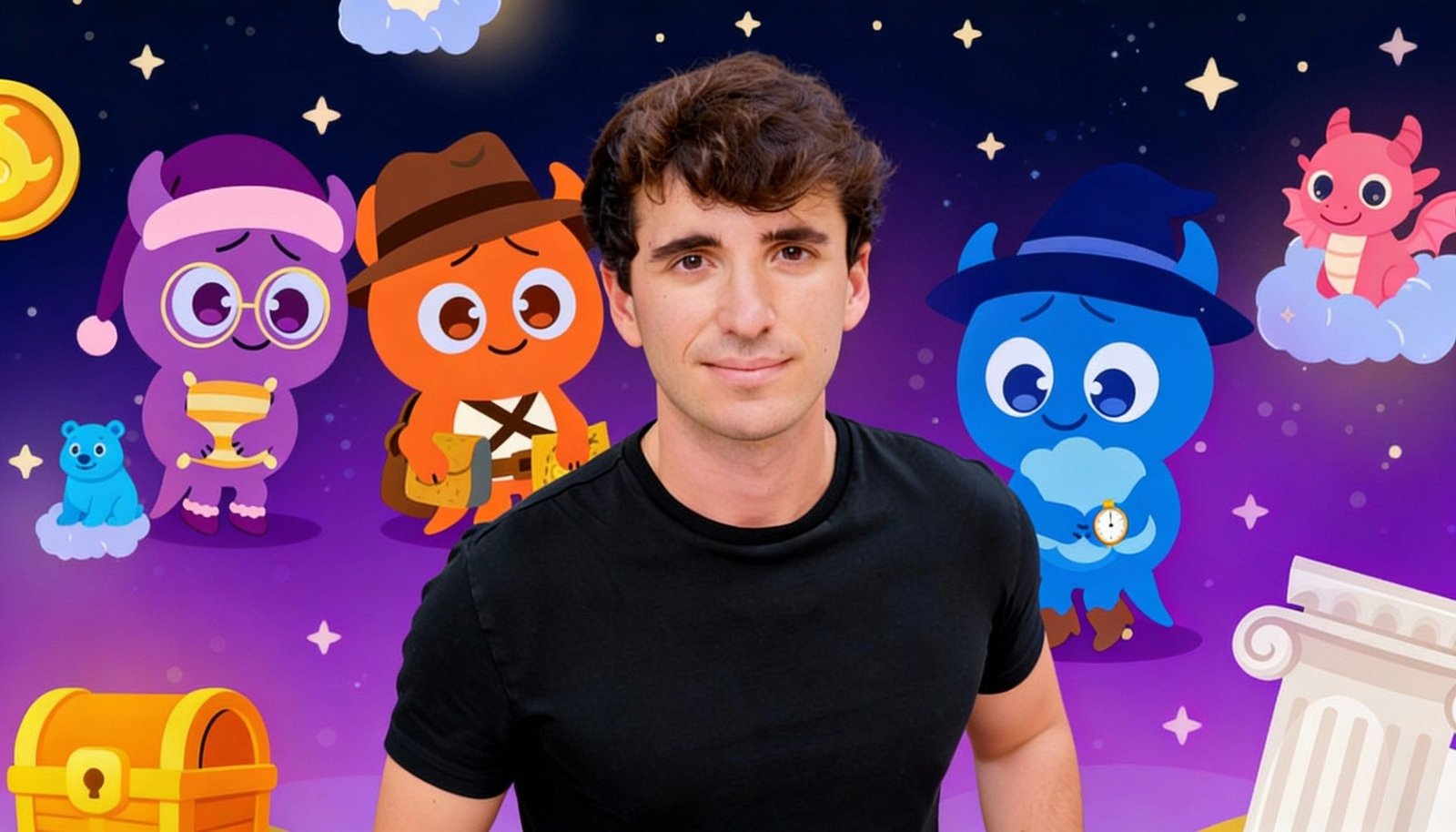
| Momo functions as a digital companion that transforms daily habits into gentle, magical “quests”. Users track sleep, focus, meditation, productivity, screen time, and mindfulness, earning virtual rewards for consistency. The design is playful, but the behavioral effect is serious. |
| “We do this through creating mythological creatures that help users track habits, sleep, focus, screen time, and much more,” he tells IT Logs. So far, the response has been remarkable. Users have created over 2 million tasks, mostly tied to productivity, spirituality, and self-care. “Our D1, D15, and D30 retention are incredible. Another sign are the thousands of rave user reviews of how Momo has helped them in their day to day lives. We are incredibly lucky to be building something that tens of thousands of people use every day to track things that make their lives happier and healthier.” – Besart Çopa |
| Drawing a line in the age of AI attachment |
| As AI companionship explodes across consumer platforms, many products drift toward parasocial attachment and emotional dependency. First Voyage has chosen the opposite path. |
| “People should find emotional dependency in their community – with other humans – not with LLMs. We think apps that prey on parasocial relationships just for the sake of attachment are net negative in the world. In a world of AI waifus and AI slop, First Voyage and Momo are an antidote,” he adds. “We’re using AI’s personalization not to further distract people online, but to create delightful experiences that help users enrich their real lives and their real relationships with real people, one small magical quest at a time.” – Besart Çopa |
| That philosophy resonates deeply with Gen Z, a generation overserved with content and underserved with tools. |
| “Gen Z is one of the most depressed generations. Technology has unfortunately not helped with this problem because instead of encouraging people to act on things that disturb them, it offers cheap distractions. Momo is an antidote to that. We use the latest tech to encourage people to take the healthy actions they know they need to take – and feel proud of them,” he tells IT logs. – Besart Çopa |
| Why investors are betting on this shift |
| Investors see the same inflection point. “It’s clear that parasocial relationships with AI-enabled characters will become one of the major form factors for how billions of people interact with AI in the future. We are extremely proud that a16z, SignalFire, and True Global Ventures believed in the vision of Momo at such an early stage.” Besart says. |
| The new funding will fuel Momo’s Android launch, further refinement of its AI and animation systems, and the broader ambition to build a defining consumer brand at the intersection of AI, design, and self-improvement. |
| Thus, such investments also show that the industry is now deploying AI to restore focus, strengthen social bonds, and rebuild the habits modern technology helped erode. In a way, the same ecosystem that perfected distraction, is now selling the cure for it. |
|


0 comments