

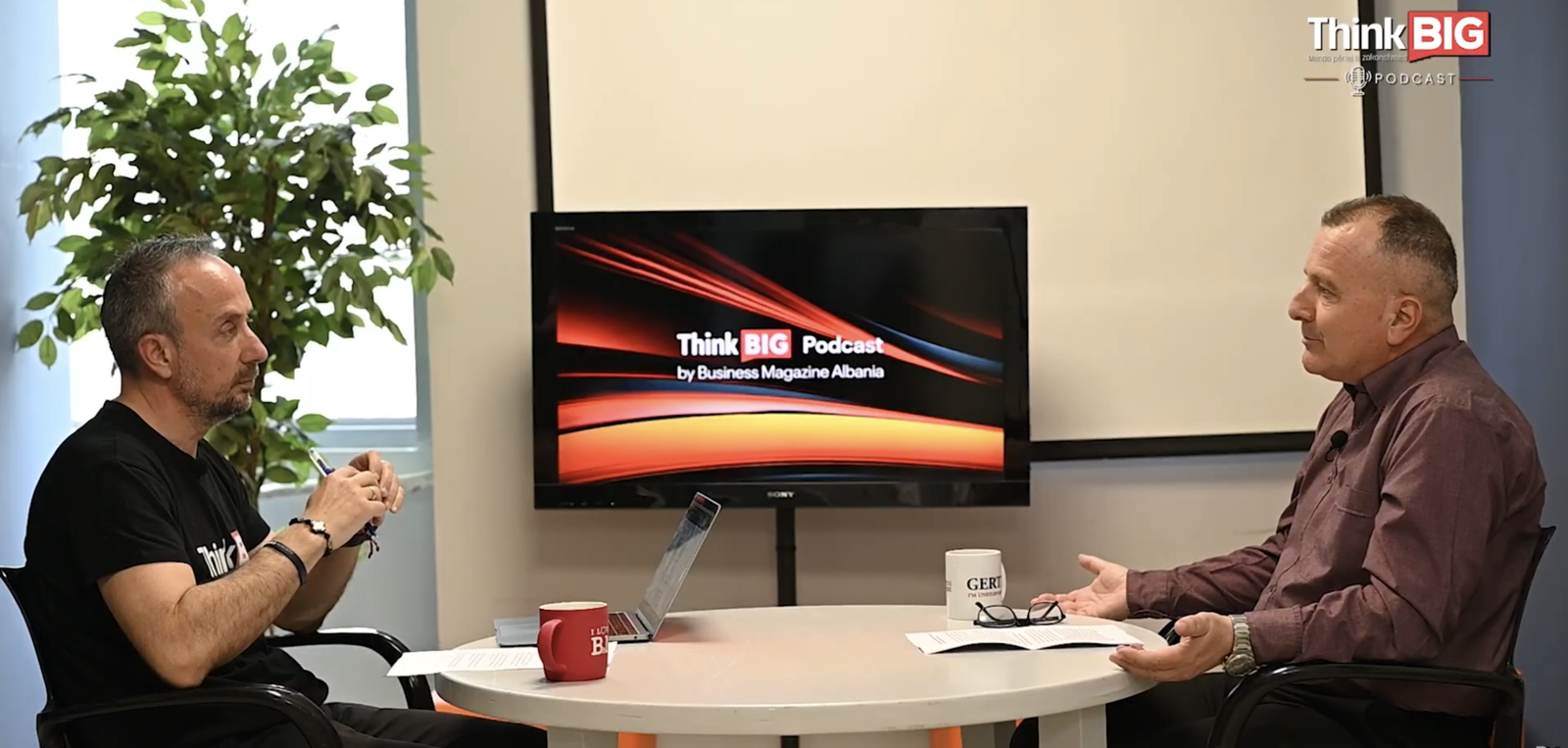
In the latest episode of Think Big Podcast, the conversation featured, Executive Director of, opening a new series of discussions between Business Magazine Albania and AmCham Albania focused on the future of business, the economy, and their impact on society.
The discussion began with Mullaj’s professional journey. Before leading AmCham, he built extensive experience working closely with Albanian, regional, and international businesses. He highlighted in particular his 15-year experience with the, where he supported more than 1,000 businesses through consulting and business development programs.
A significant part of the episode focused on the role of AmCham in Albania. Mullaj emphasized that the American Chamber, now with more than 25 years of history, has been built around a clear American model: business representation, advocacy, transparency, and active member involvement in decision-making processes. According to him, one of the key reasons members remain close to the Chamber is because they genuinely feel part of it.
AmCham maintains a membership retention rate of over 92% and operates through structures such as the board, the assembly, and sector-focused committees. These committees cover areas including taxation, investment, labor, legal affairs, digitalization, healthcare, tourism, energy, and critical infrastructure.
At the center of the discussion was also the process of public consultation and lobbying. Mullaj explained that AmCham closely follows draft laws that impact businesses, gathers expertise from its members, and presents recommendations to institutions. However, he acknowledged that the process still does not function with the effectiveness it should and stressed the need for a change in mindset: the state must begin to see businesses as true partners.
Another key topic was Albania’s business climate. Mullaj referred to the Albanian Business Index, a measurement AmCham has been conducting for the past 12 years. According to him, the index remains below 50 points, indicating that businesses are still not satisfied with the current conditions of doing business in the country. The most recurring challenges continue to be the lack of qualified workforce, informality, fiscal burden, corruption, and bureaucracy.
Despite these challenges, the tone of the conversation remained optimistic. Mullaj emphasized that the Albanian business community is highly resilient and has been one of the driving forces behind Albania’s transformation over the last three decades. According to him, AmCham’s priorities for the future include strengthening public consultation processes, building stronger ties with the U.S. market, attracting investors, and contributing to a more sustainable fiscal system.
The episode concluded with the message that improving the business climate is not only in the interest of companies, but also a necessary condition for sustainable economic development and greater social well-being. Through this new series of conversations, Business Magazine Albania and AmCham aim to create more space for reflection, dialogue, and concrete ideas about the future of the country’s economy.
0 comments